

Why coaching-led leadership?
Most managers were promoted because they were good at the job. Very few were taught how to lead people.
That's the gap that coaching-led leadership closes. Not by bolting on another initiative, but by changing the smallest unit of management (the 1:1 conversation) so that your managers develop their people as part of the day job.
When managers lead with coaching skills, they stop being the person who has to have all the answers. They ask better questions. They listen at a different level. They give feedback that sticks. And the data, the research, and twenty-five years of our own experience all point in the same direction: it works.
"Great leaders coach people to develop their strengths and skills to succeed. This includes creating a coaching culture that sits at the heart of employee engagement."
Sharon Lawton, Head of Coach Education, The Coaching Academy
The engagement problem is a management problem.
Gallup's global engagement data shows only around 1 in 5 employees are genuinely engaged at work, and the single biggest factor shaping that number is their direct manager.
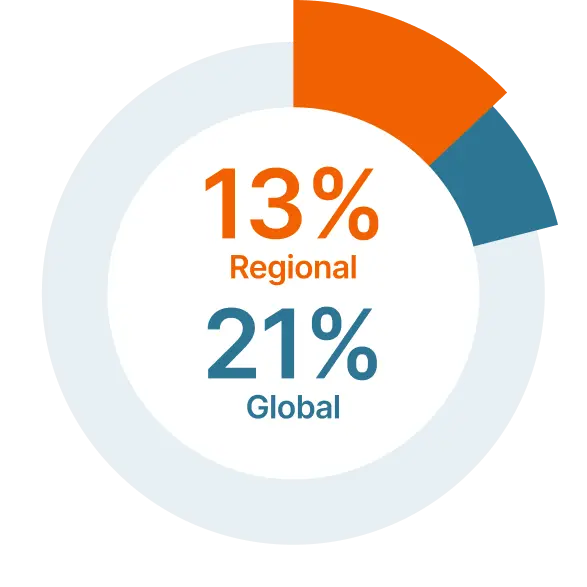
Thriving at Work
% Engaged
Global 20% · Regional 12%
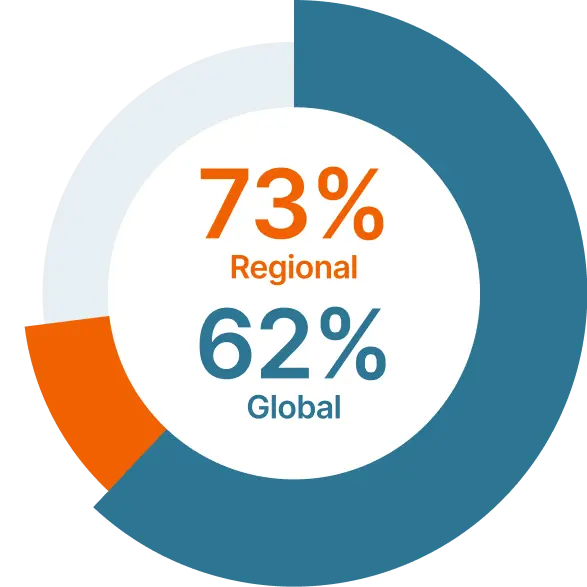
Quiet Quitting
% Not Engaged
Global 64% · Regional 73%
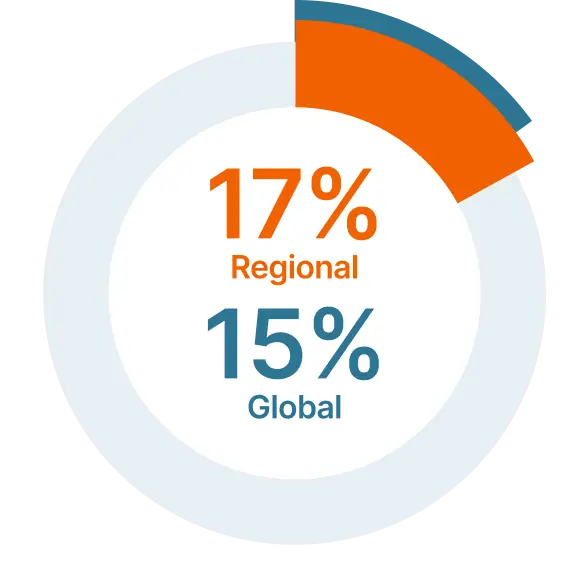
Loud Quitting
% Actively Disengaged
Global 16% · Regional 15%
Source: Gallup, State of the Global Workplace Report 2026
What actually changes
Five shifts we see in every organisation we work with.
These aren't aspirational. These are the patterns we see repeat across Chanel, Trinny London, Visa University, Harper & Keele, and every other client we've trained.
1. 1:1s stop being status updates.
Before training, most 1:1s run through task lists and update chains. Afterwards, managers spend time on what the person is working through, not just what they're working on. The meeting does more in less time.
2. Feedback happens more often, not less.
Counter-intuitively, coaching-trained managers give more feedback, not less, because they have a structure for doing it that doesn't feel confrontational. Hard conversations become routine rather than stored up for the annual review.
3. Problems come in with solutions attached.
Teams work out what to do before escalating, because their manager stopped being the oracle. Managers get their calendar back. People grow.
4. Retention of high-potentials improves.
People stay where they feel developed. The managers teams don't want to leave are almost always the ones who invest in their growth, and coaching-trained managers do that visibly and consistently.
5. Leadership language becomes consistent.
When enough of your managers have done the programme, they share vocabulary, models and practices. That shared language is what takes this from training to culture.
The research
Why training your leaders to coach matters.
Highly effective organisations treat coaching skills as core leadership competency, not as an extra. Research from the Human Capital Institute frames it cleanly:
"A coaching culture is a critical element in the organisational toolbox for navigating and thriving in today's complex work environment, due to the advent of remote and hybrid work models and the broader necessity for effective communication, skill optimisation, and employee career development. In response to this need, coaching has emerged as a vital tool."
The benefits compound.
- Strengthened leadership development
- Boosted employee engagement
- Increased commitment and discretionary effort
- Enhanced manager-team relationships
- Improved team functioning and decision-making
- Higher retention of high-potential talent
- Clearer succession pipelines

Proof it works
You're in good company.
The organisations below trusted us to develop their leaders. Each case study walks through the challenge, what we did, and the outcome.

LUXURY RETAIL
Equipping newly promoted store managers with coaching skills. Boosting confidence, team impact and strategic thinking across Chanel's UK boutiques.

FINANCIAL SERVICES
DISC-based training for Visa's internal trainers. Improving interpersonal effectiveness and learning outcomes across the University programme.

SMALL BUSINESS
Tailored DISC coaching for Holly Tucker's creative team. Strengthening team dynamics and building the culture of a fast-growing small business.

INFRASTRUCTURE
Embedding coaching into LCCC's graduate programme. Building internal coaching capability alongside leadership development.

HIGHER EDUCATION
A consistent coaching culture at Harper & Keele Vet School. Unifying leadership across a new joint institution and supporting student development.
Let's talk
Book a 15-minute discovery call.
Tell us the challenge you're trying to solve and we'll tell you honestly whether coaching-led leadership is the right answer, and if so, which programme fits. No pitch deck, no pressure.
What happens next: We respond within one working day. The first call is 15 minutes. If it's a fit we'll scope and price a programme together over 2–3 further conversations.

